
Since the early elections in the United States, redistricting has consistently played a role in the electoral process. Redistricting involves drawing new borders for representation in state and federal legislatures. However, drawing new borders often leads to corruption within the system. Gerrymandering is the deliberate manipulation of redistricting to favor one party over another. Gerrymandering mostly involves two methods of manipulation: packing and cracking. Packing is putting a large number of certain voters into one district to make one large majority district. Cracking is dividing certain voters into two separate districts. Currently, the Democratic Party and the Republican Party are fighting a conflict over new districts drawn in Republican controlled legislatures, with Democrats accusing Republicans of gerrymandering, and in return, the Democrats fight back with their newly drawn districts.
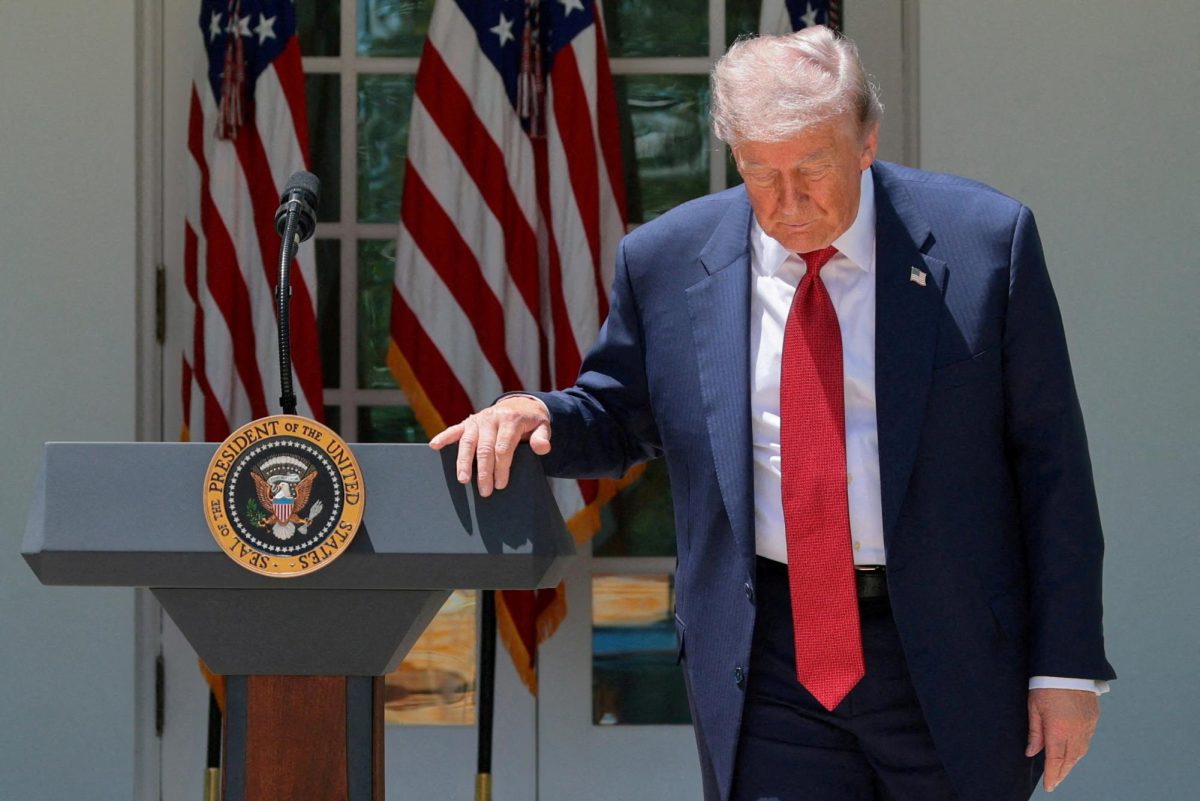
The conflict started with the Texas state legislature approving a newly drawn district plan, giving the Republican Party five additional seats in the legislature. The plan targets major Democratic voting hubs like the cities of Houston and Dallas. The Trump administration has been heavily involved in the process of the district plan. The administration urged the Republican leaders to draw additional Republican seats in preparation for the expected Republican losses in the 2026 midterm elections. “Texas will be the biggest one. And that’ll be five,” President Donald Trump said.
As a result of the Texas district plan, the Democrats are planning their own new district plans to combat the Republican plans. Governors of California and Virginia approved new district plans in their states that would offset the losses due to Texas. “California will not sit idle as Trump and his Republican lapdogs shred our country’s democracy before our very eyes,” Governor Gavin Newsom said.
In other states like Louisiana and Tennessee, Republican legislators are drawing new districts, removing African-American majority districts from existence. Democrats argue the new district restricts African-American voting power, and violates section two of the Voting Rights Act of 1965. Phillip Callais from Louisiana sued his state’s legislature for gerrymandering and violating the 14th and 15th Amendments of the Constitution in Louisiana vs Callais. Eventually, the case went into the Supreme Court’s jurisdiction, and the court argued the case in March and December 2025. In April 2026, the court came to a decision, and argued sided with the state of Louisiana. In a 6-3 decision, Justice Samuel Alito, writing for the court, argued the Voting Rights Act does not require states to draw a majority-minority district. “Because the Voting Rights Act did not require Louisiana to create an additional majority-minority district, no compelling interest justified the State’s use of race,” Alito said.
Overall, the redistricting conflict has brought many challenges to the state of American democracy. If the Republicans succeed, their new districts will follow, and a GOP majority in Congress will be secured. If the Democrats succeed, the new districts will be stopped, Congress will still be at play, and up to the voters. Republicans and Democrats have fought eye for eye, tooth for tooth, but the conflict still has a long way to go before the crucial midterm elections in 2026.