
The Artemis II mission officially launched earlier this week, drawing millions of viewers both in person and online. But what really makes this moment stand out isn’t just the launch itself—it’s how people everywhere, including high school students, were able to watch it unfold live through social media. Instead of waiting for news updates, people could open apps like TikTok, Instagram, or YouTube and see the rocket lift off in real time.
Artemis II, NASA’s next big step toward returning humans to the Moon, is sending astronauts around the Moon and back. What’s different this time is how connected everything feels. Social media platforms were filled with livestreams, countdowns, and behind-the-scenes footage leading up to the launch. Even after liftoff, updates kept coming, making it easy to stay informed without turning on the TV.
“I’ve always been interested in space, and now I feel more educated since I can see updates and informational videos on my for you page.” Said Alyson Jeske (11)
For students, this made space exploration feel way more real. It wasn’t just something we read about in textbooks—it was happening right in front of us. Some teachers even played clips during class or talked about the mission, making lessons more interesting and relevant.
Social media also lets younger people be part of the conversation. Students can post reactions, share clips, and even explain what’s happening in their own words. It turns a huge scientific event into something interactive instead of distant.
There are still downsides, like misinformation spreading quickly online, but overall, the experience brings people closer to major events like this.
Instead of just hearing about history later, our generation gets to watch it happen live, right from our phones.
Social media coverage of Artemis II
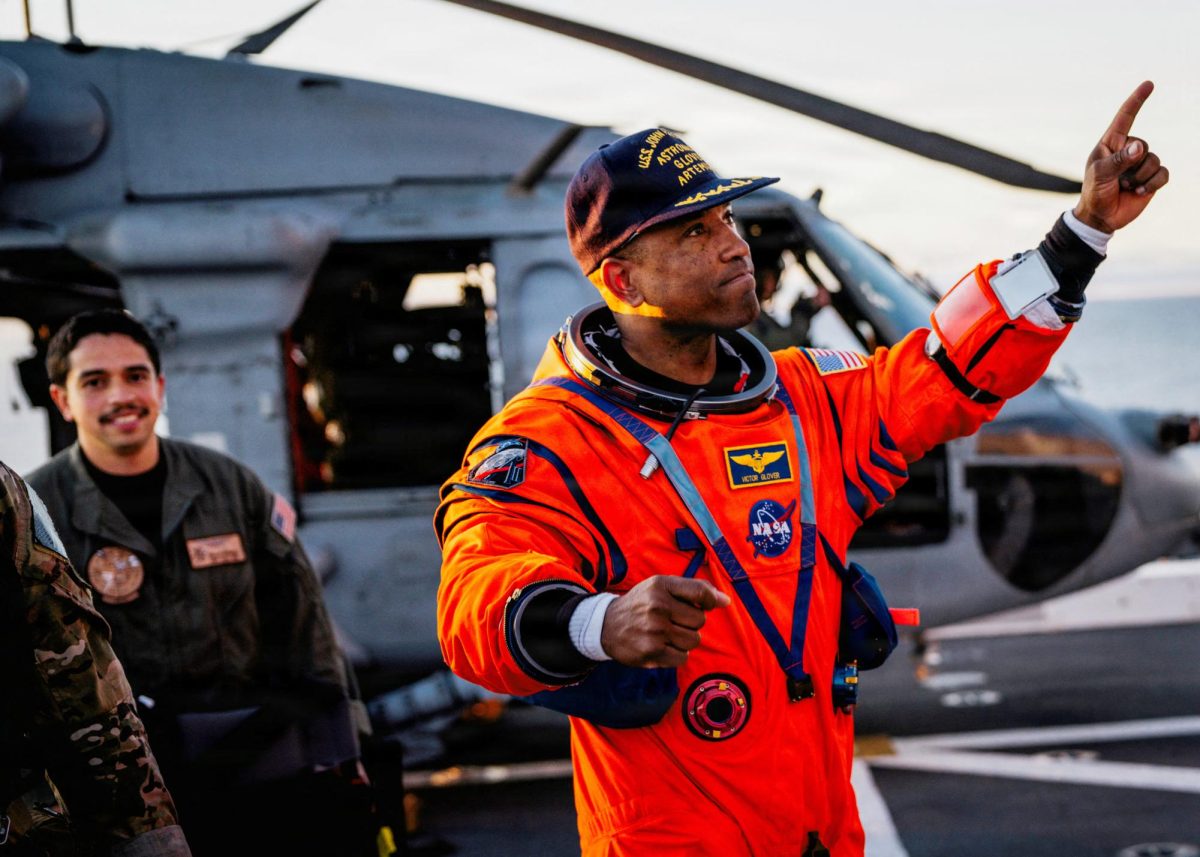
REUTERS/via SNO Sites/US Navy
NASA astronaut Victor Glover reacts on the flight deck of the U.S. Navy’s USS John P. Murtha after returning from their crew’s Artemis II Moon flyby mission’s Orion capsule, which splashed down in the Pacific Ocean off the coast of California, U.S., April 10, 2026. U.S. Navy/Mass Communication Specialist 2nd Class August Clawson/Handout via REUTERS