
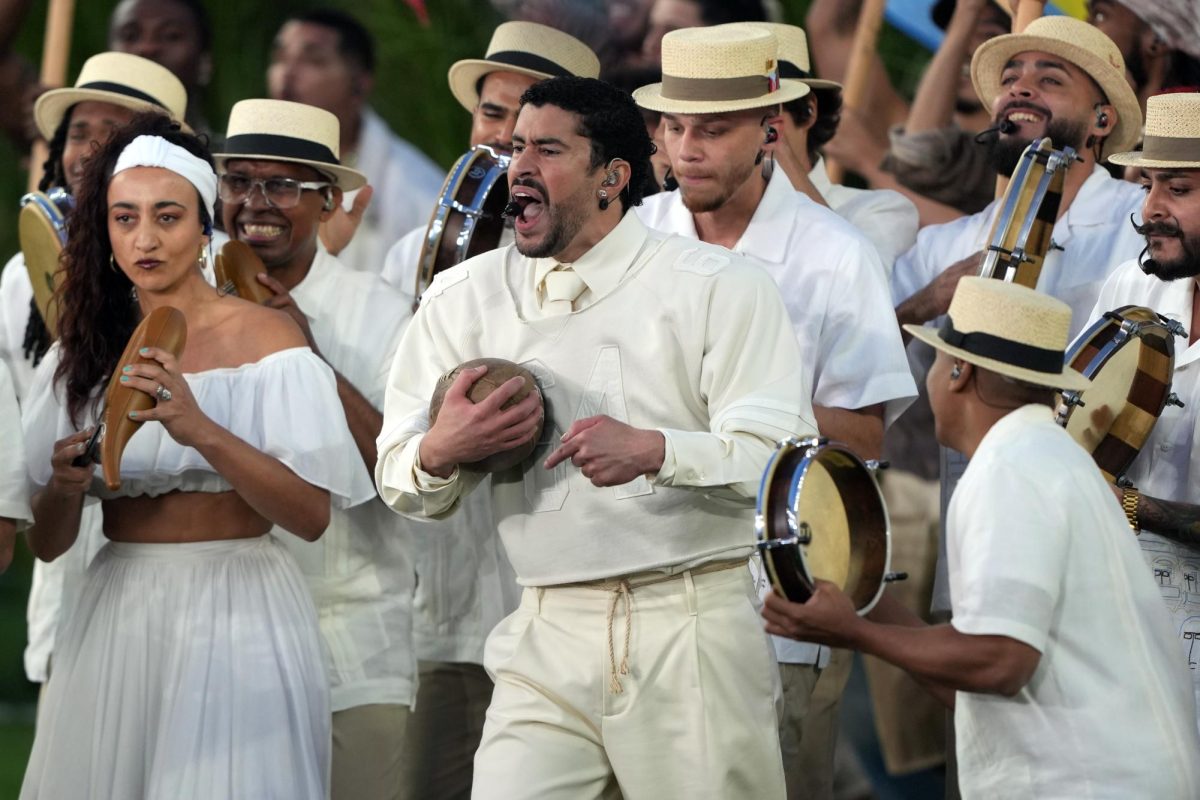
When Bad Bunny took the stage at the Super Bowl halftime show, it was more than just another performance during America’s biggest sporting event. In front of one of the largest television audiences in the world, the Puerto Rican superstar delivered a show that celebrated Latin culture, embraced the Spanish language, and sparked conversations far beyond football. For many viewers, the performance was more than just entertainment.
Born Benito Antonio Martínez Ocasio, Bad Bunny has become one of the most influential artists in the world, known for blending reggaetón, Latin trap, and Caribbean rhythms while proudly singing primarily in Spanish. Over the past few years, he has broken streaming records, sold out stadium tours, and brought global attention to Puerto Rican culture.
During the halftime show, Bad Bunny filled the stadium with vibrant visuals, high-energy choreography, and powerful cultural symbolism. Dancers waved Puerto Rican flags, traditional rhythms blended with modern beats, and the performance highlighted everyday images and pride from his homeland. Rather than changing his style to fit a typical Super Bowl audience, he stayed true to his roots, performing in Spanish and showcasing the sounds and culture that shaped his career. The result was a performance that felt both celebratory and meaningful, turning a halftime show into a statement about identity and representation.
Beyond the music and visuals, the performance carried a deeper cultural impact. By headlining one of the most-watched events in the United States, Bad Bunny brought Puerto Rican and Latin American culture to a stage that has traditionally featured mostly English-language music. The show also sparked national conversations about diversity, representation, and what it truly means to reflect modern American culture in a country shaped by many different backgrounds.
The reaction to the performance was immediate and intense. Many fans, celebrities, and cultural commentators praised Bad Bunny for using his platform to celebrate his heritage and represent Spanish-speaking communities on such a massive stage. Social media was filled with messages of pride and excitement from viewers who felt seen and included. At the same time, some critics questioned the heavy use of Spanish or felt the performance was too culturally specific for a traditionally “mainstream” event.
According to CBS’s new story “ Bad Bunny’s Super Bowl Halftime show role breaks barriers and sparks debate,” by Luis Giraldo, “Listen, Bad Bunny is … one of the great artists in the world, and that’s one of the reasons we chose him,” Goodell said after the Grammys. “But the other reason is he understood the platform he was on, and that this platform is used to unite people, and to be able to bring people together with their creativity, with their talents, and to be able to use this moment to do that. And I think artists in the past have done that. I think Bad Bunny understands that, and I think he’ll have a great performance.”
What makes Bad Bunny’s Super Bowl performance truly important goes beyond the music or the spectacle. It showed that representation matters on the biggest stages, giving visibility to Latinx and Spanish-speaking communities in a way that few other moments have. It challenged traditional expectations of what a “Super Bowl halftime show” looks like, proving that cultural authenticity can resonate with millions of viewers. Most importantly, it sparked conversations about identity, inclusion, and unity, using music as a bridge to connect people across different backgrounds, languages, and experiences.
In the end, Bad Bunny’s halftime show was more than just a performance. It was a celebration of culture, language, and identity that left a lasting impression on viewers around the world. By staying true to his roots and sharing Puerto Rican pride on the NFL’s biggest stage, he created a moment that went far beyond entertainment. For many, it was a reminder that representation matters, that music can unite, and that the stories of diverse communities deserve to be seen and heard.