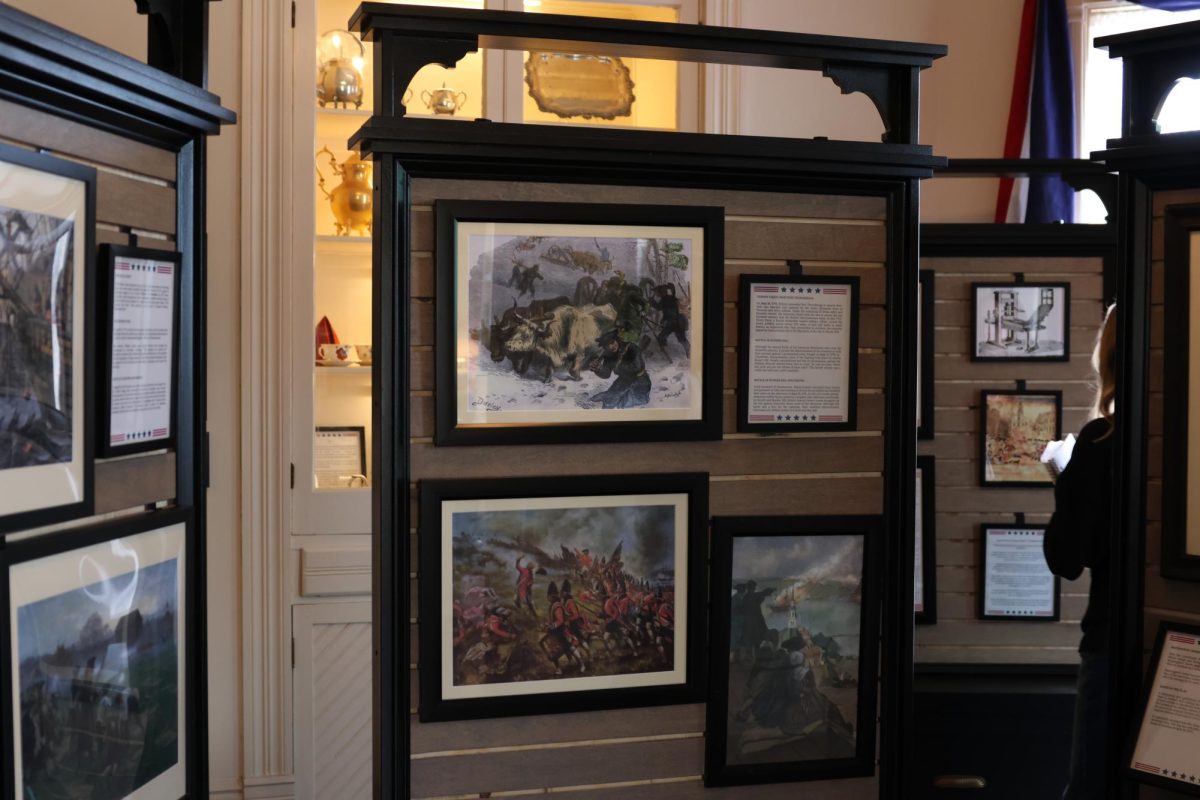
The historic Brown House, off of North Ballard avenue in Downtown Wylie, has recently opened an exhibit in honor of America’s semiquincentennial.
The exhibit, titled “The American Experiment: A Celebration of America 250,” touches on a wide variety of topics, including early American culture, essential moments of the American revolution, and a view into the lives of many of the founding fathers.
The Brown House, built in 1905, now operates as a museum and welcome center dedicated to preserving Wylie history. Creating the anniversary showcase required the Brown House team to dive deep into America’s origins, which included around 10 months of research, curation, and preparation.
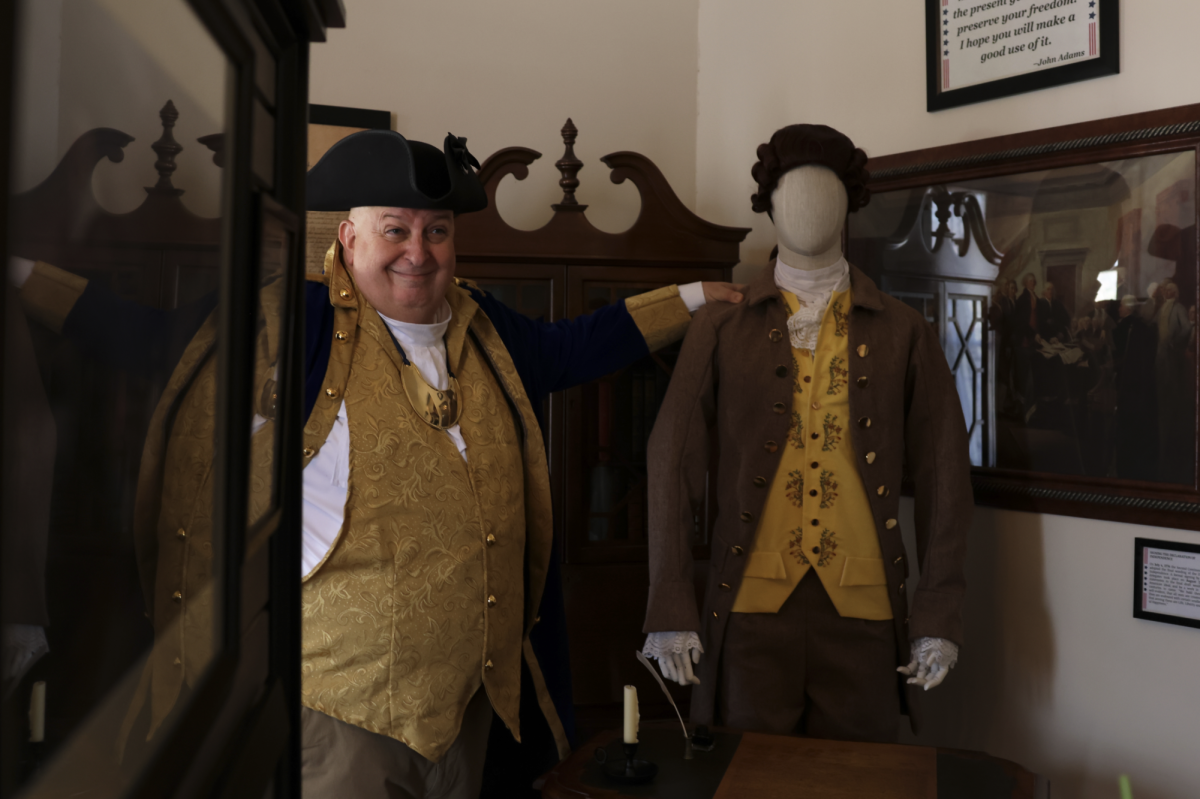
“The literal logistics of bringing together the props and everything [is] quite a challenge. And that really falls upon all seven of our staff members,” said Christopher Raso, who works as a contributor to the house, and re-enacts George Washington within the exhibit.
There’s a variety of interactive elements, readings, images, and paintings within the historic home. Each room is precisely decorated in period accurate furnishings, and contains a variety of curated and donated artifacts, like vintage looms and antique china. Re-enactors, like Raso and fellow curator Tracy Lawson, dress in colonial garb and engage with guests, telling them detailed stories about America’s creation.
“The past, we can get it from books. Nothing wrong with our primary sources. We can get it from secondary sources. But when we’re in a place like this and you’re in a house, especially 120 years old, when you see re-enactors who are doing their best to look the part, it brings a level of realism to it all,” said Raso.
Lawson, an author, describes delving into historical research as captivating. “You’ve got these people that died 220 years ago, but they are still alive in my brain. They’re young and dynamic.”
The exhibit provides a candid look into America’s early development, and while the showcase highlights many of America’s most formative and valuable moments, it also acknowledges our downfalls as a republic.
“We have a country that gave us 250 years of a Declaration of Independence, and it’s still applicable today. But what do you do with the shortcomings?” said Raso.
“If we don’t remember where we came from, we’re not going to have an appreciation for where we’re at or where we’re going. If you’re going to build a future, you have to have a clear understanding of what happened in the past.”
Raso believes the exhibit imparts a generally positive message about the brilliancy of the Revolutionary and Early Republic eras of the country though. “We try to focus on what was done right first. The Brown House and the America 250 program here at the Brown House is really all about giving us that look. This is what you should be patriotic about. The genius of the country, the genius of the people involved who gave us what we have so that we could build on it. They knew we would make mistakes, but they gave us the world so we could start somewhere.”
The America 250 exhibit will be open until mid-September, and is free to the public.