
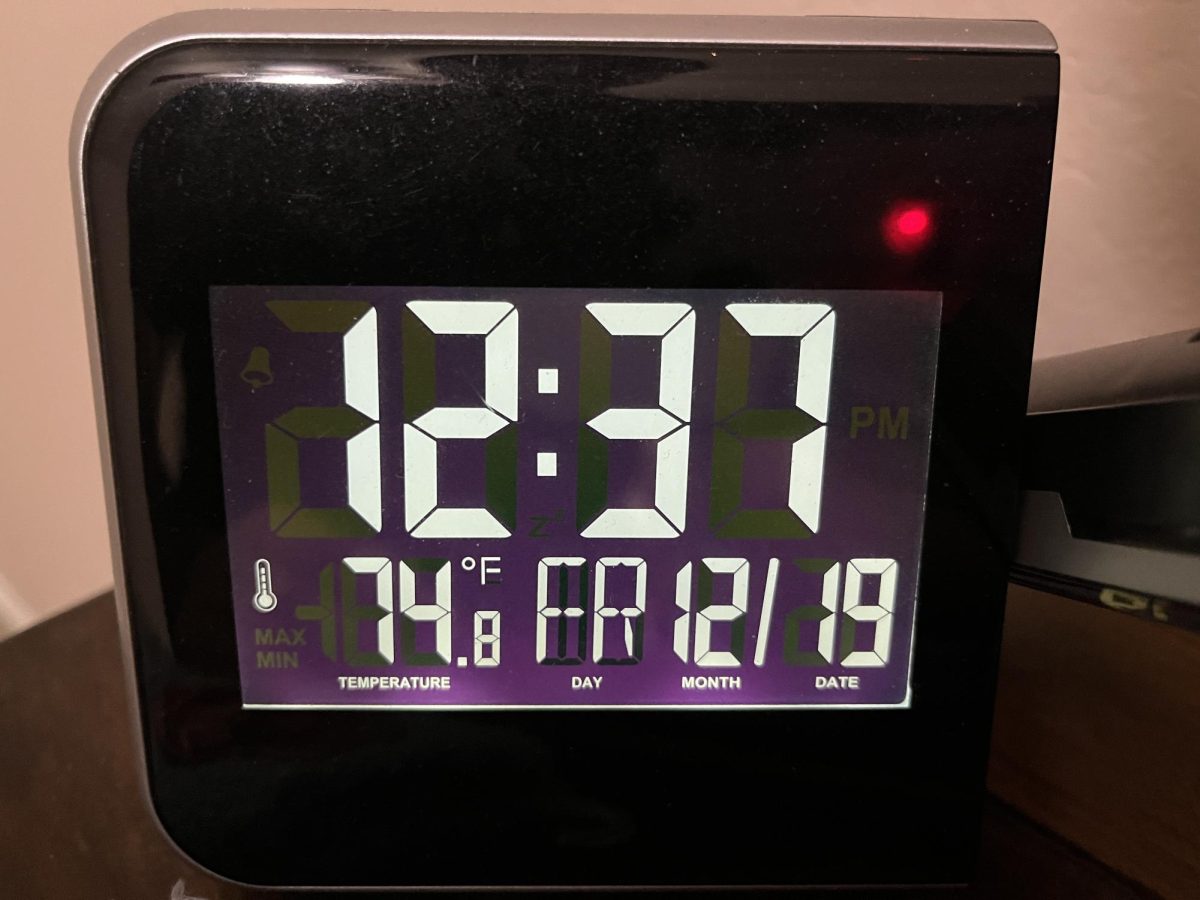
A lot of students do not hit the recommended amount of sleep they should be getting, with most students only averaging six to seven hours per night, while health experts suggest that teenagers should get at least eight hours of sleep. This is a widespread problem, and lack of sleep has become more common among students as years pass.
Academic pressure is a big issue when it comes to students staying up longer than they really should. Staying up for homework, studying for exams, or doing extracurricular activities causes students to push their bedtime dangerously late. Some of the blame is also on students, as screens make it harder to fall asleep. Together, these two factors cause a big issue when it comes to students getting to sleep on time.
Consistently getting too little sleep can have serious effects on students’ daily lives. Fatigue reduces focus and makes it hard to listen and concentrate, which in turn lowers academic performance and affects mental and physical health. However, experts explain that improving sleep habits can help students succeed.