
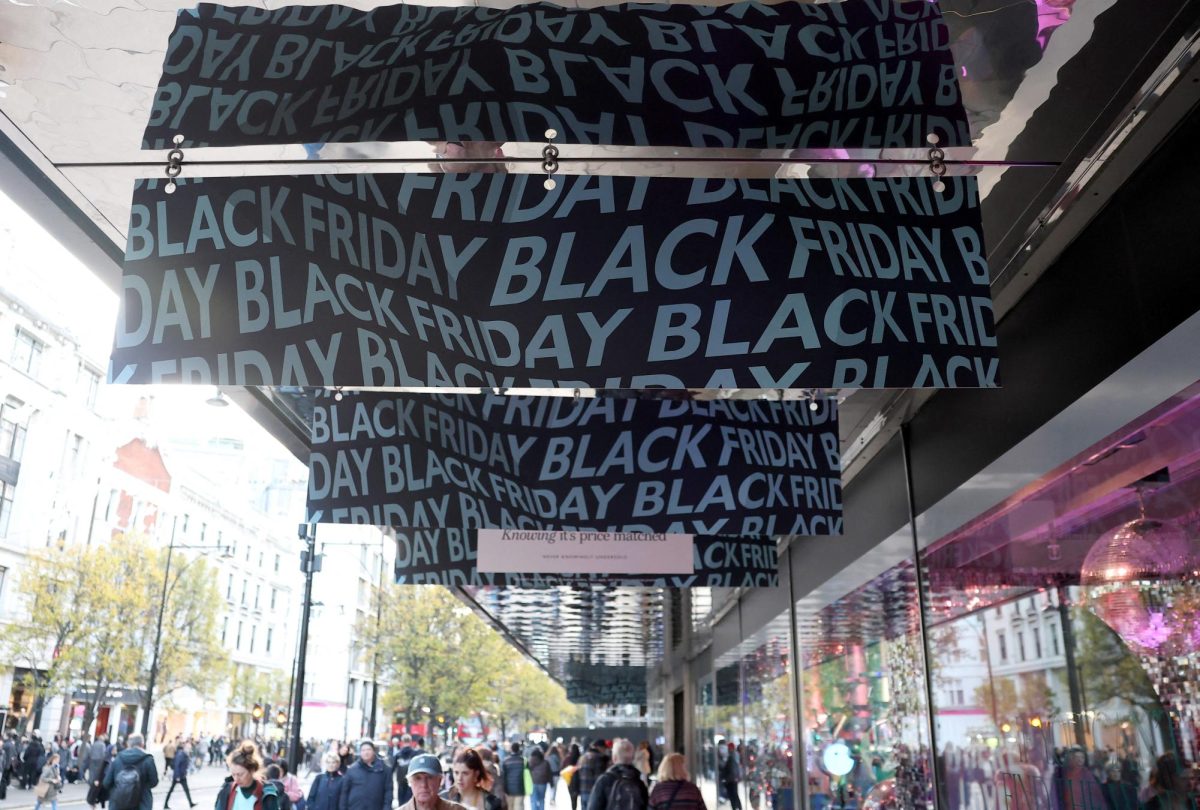
On Friday, Nov. 28, stores across the country offered discounts on all items as part of the Black Friday tradition. The tradition is widely considered the end of the Thanksgiving season and the start of the Christmas season. Many customers stay up into the wee hours of the morning to rush into stores to buy discounted products before they’re out of stock.
The origins of Black Friday date back to the presidency of Franklin D. Roosevelt, when President Roosevelt declared Thanksgiving to be on the fourth Thursday of November rather than the third Thursday. President Roosevelt wanted to extend the Christmas season to boost economic output. Then, in the 1950s, the term was popularized when workers asked for the Friday after Thanksgiving off to get a 4-day weekend. The term was used by police in the Northeastern United States to describe the out-of-control roads on Friday after Thanksgiving.
The Black Friday we know today, gained popularity in the 1980s. Stores in the 1980s gave mass discounts across the board, and it slowly became the most profitable shopping day of the year. According to Adobe Analytics, this year, U.S. customers spent 11.8 billion dollars online on Black Friday deals, a 9.1% increase from the previous year. In retail sales, sales increased by 4.1%. In addition, the current inflation rate has increased the average price of products, leading to higher prices.
It’s clear that Black Friday sales are growing each year exponentially, and customers find new ways to search for the best deals. According to Adobe Analytics, AI traffic to online stores increased by 758% the entire month of November. It’s likely that customers are using AI to find Black Friday deals online. Black Friday has only been a part of the U.S. phenomenon for four decades, but it’s clear the tradition will stay and will progress into the AI driven future.